01
New React Native apps and MVPs
Launch on iOS and Android together from one codebase, test with real users, then grow the app without a rewrite.
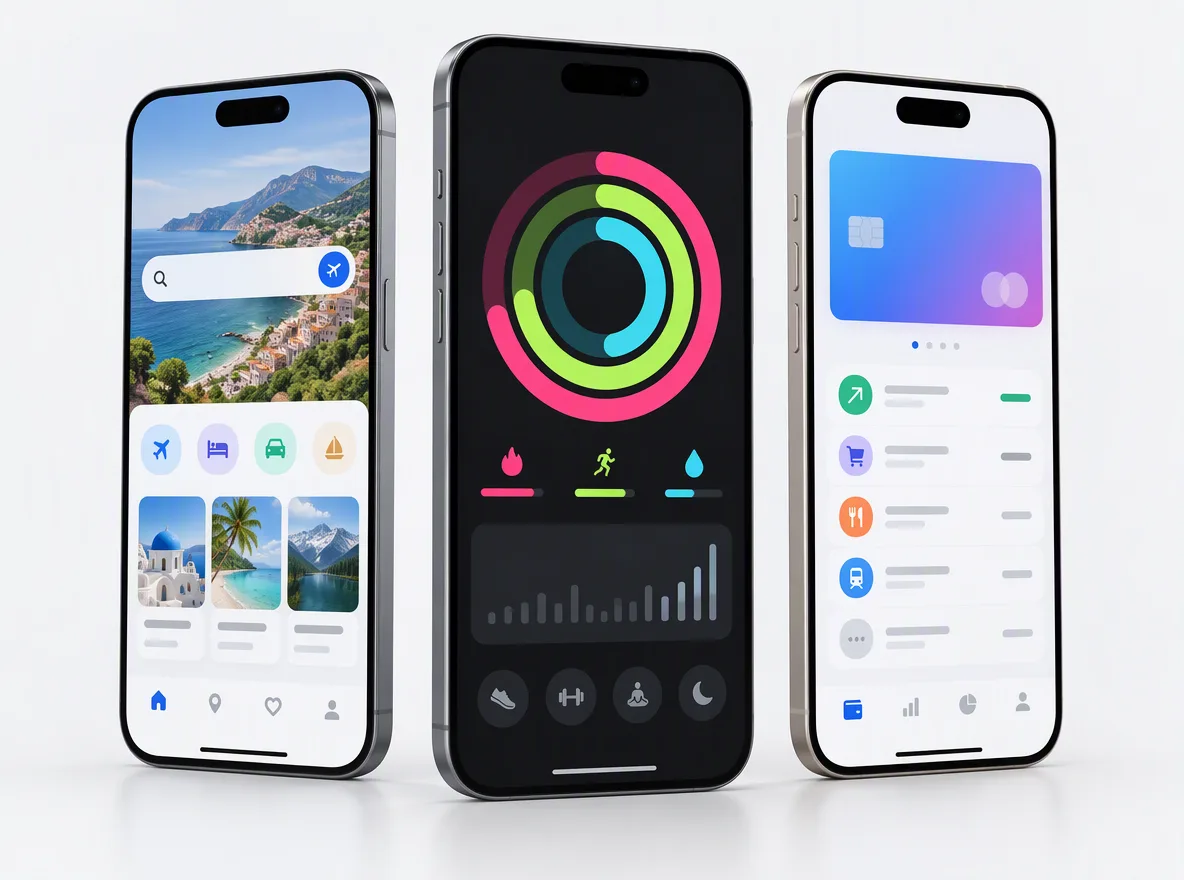
FIG 01 · React Native App Development
One TypeScript codebase, real native UI on both platforms. New apps with Expo, upgrades to the New Architecture, AI features and a store launch handled for you.
See how it works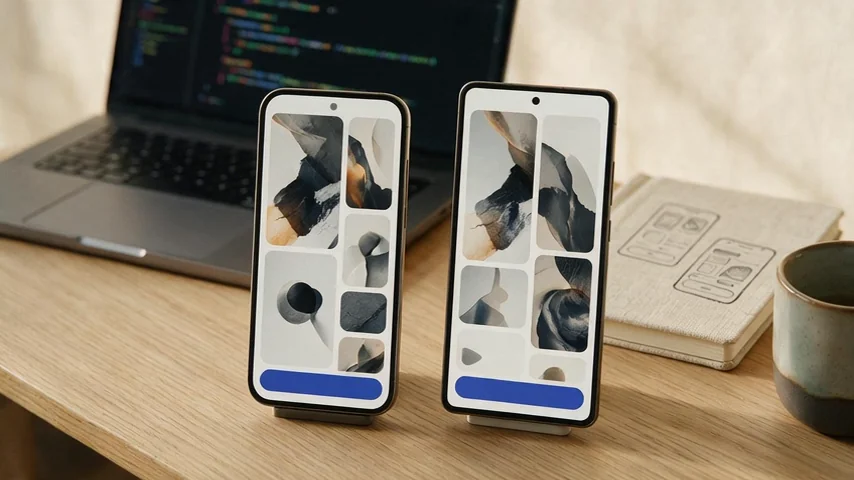
FIG 02 · Quick answer
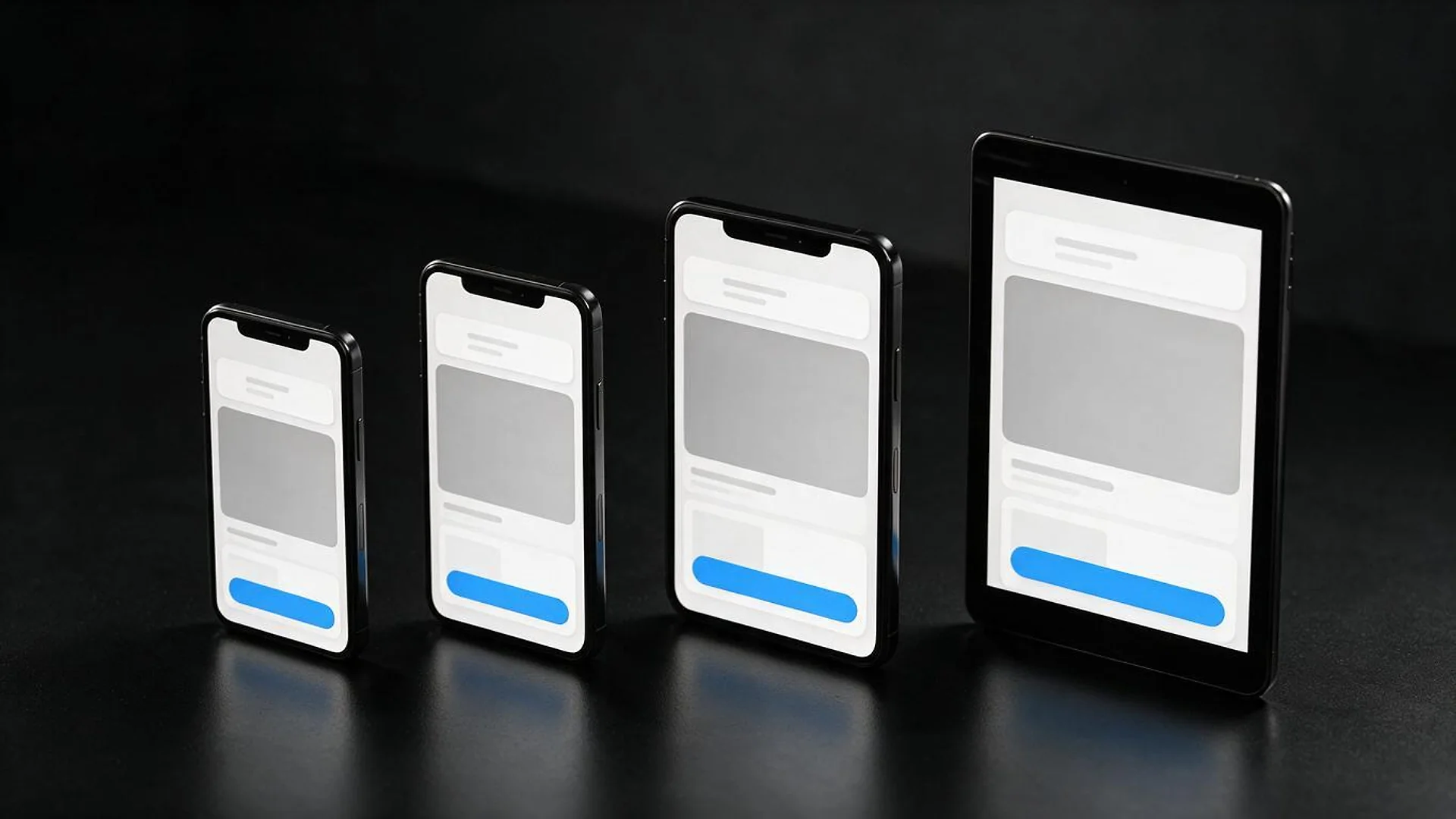
A React Native development company builds iOS and Android apps from one JavaScript or TypeScript codebase that renders real native UI. Elgrith designs and builds React Native apps with Expo, upgrades older apps to the New Architecture, adds AI features and native modules where needed, and handles App Store and Google Play release and support.
FIG 03 · Why it matters
From React Native’s own release notes and showcase. The architecture that used to hold it back is gone.
01
0.76
Starting from React Native 0.76, the New Architecture is enabled by default in new projects.
Source: reactnative.dev, React Native 0.76(opens in a new tab)02
0.82
From React Native 0.82, the New Architecture is the only architecture for that and future versions. Older apps need an upgrade path.
Source: reactnative.dev, React Native 0.82(opens in a new tab)03
Shopify
React Native’s showcase says all mobile apps at Shopify are built using React Native.
Source: reactnative.dev showcase(opens in a new tab)FIG 04 · Honest fit
React Native renders real native components from one TypeScript codebase. It is a strong default for most business and consumer apps. Here is where it shines, and where we would recommend something else.
| React Native is a strong fit | Consider something else | |
|---|---|---|
| Team | Teams that know React and TypeScript, or want web and mobile in one language | Separate iOS and Android teams you already run well |
| UI | Platform-native components that feel at home on each OS | A pixel-identical custom UI everywhere (Flutter draws its own) |
| Device features | Camera, maps, payments, push, Bluetooth through libraries or native modules | Apps built almost entirely on the newest native SDKs |
| Graphics | Business, commerce, social and content apps | Heavy 3D, games or real-time video processing |
| Code sharing | Logic and types shared with a React or Next.js web app | No web product, and no plans for one |
When React Native isn’t the right tool, we’ll say so and build in Flutter or native Swift and Kotlin instead.
Compare: Flutter app developmentFIG 05 · What you get
From first prototype to store release and beyond: one TypeScript team for your iOS app, your Android app and, if you need it, your web app.

01
02
03
04
05
06
Deliverables
12
FIG 06 · Flagship build
Kenerate AI is a web product, not a React Native app. It’s our flagship build, an all-in-one AI image and video studio we designed and engineered, and it shows the AI-integration depth we bring to your app.
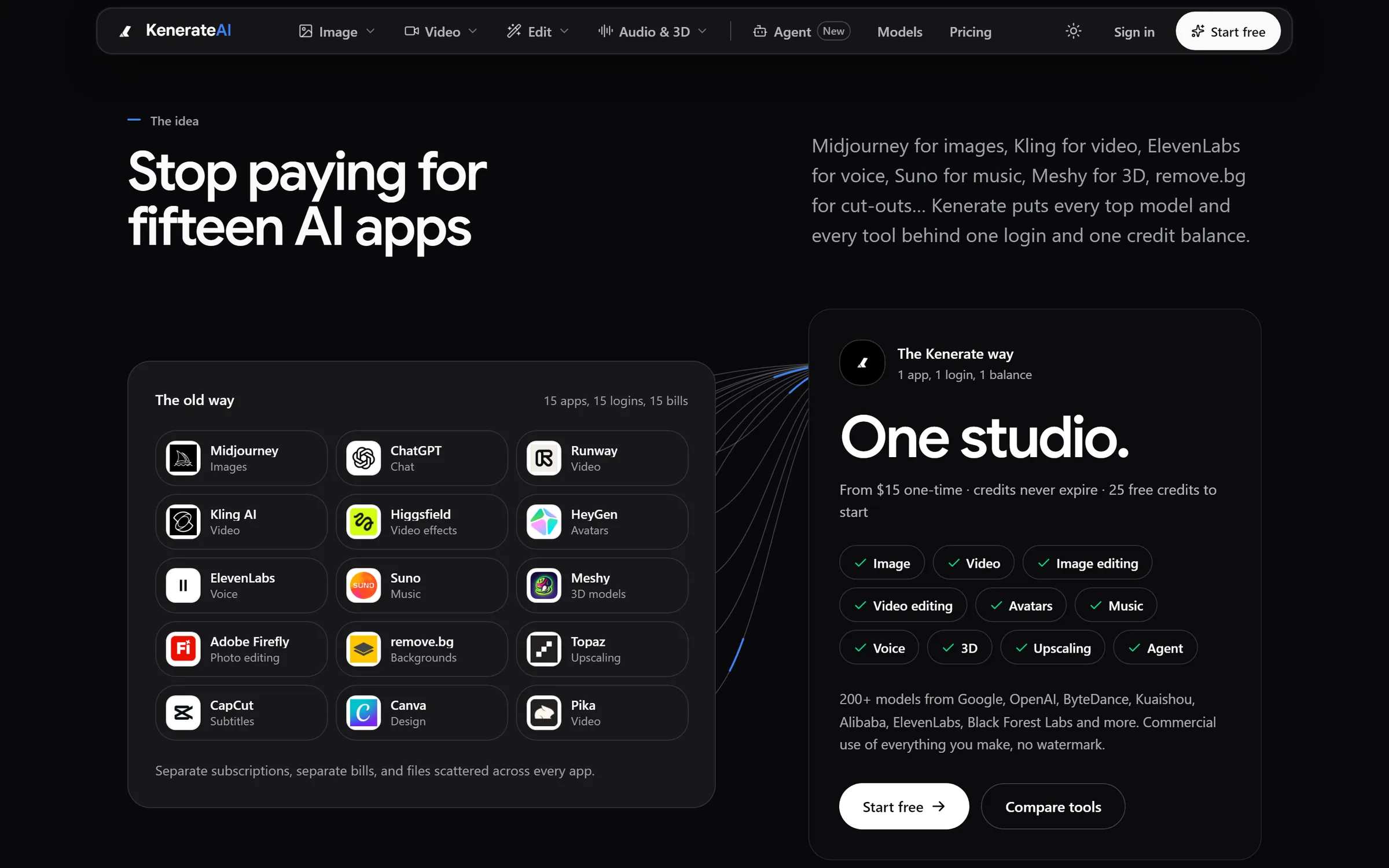
The idea: 15 apps, 15 logins, 15 bills become one studioDesigned and engineered by Elgrith
FIG 07 · Under the hood
The technical choices that decide whether a React Native app stays fast and easy to change after version one.
06principles
Fabric, TurboModules and the Hermes engine on every new app, with libraries checked for compatibility before we pick them.
Typed screens, API clients and navigation, so the codebase stays safe to change as it grows.
EAS Update for JavaScript fixes between store releases, with staged rollouts and a way back.
Unit and end-to-end tests, with EAS Build, fastlane or GitHub Actions shipping test builds automatically.
Startup time, frame rate and memory profiled on low-end Android phones as well as new iPhones.
Accessibility labels, scalable text, contrast and screen reader checks on VoiceOver and TalkBack.
FIG 08 · Go further
Your app rarely lives alone. These are the services that most often sit next to it.
06principles
Your web app in React and Next.js, sharing types, logic and design tokens with the mobile app.
React & Next.js developmentProve the idea with a lean first version before you fund the full roadmap.
MVP developmentAssistants, search and generation features planned and built with your app.
AI developmentSpeed, cost and hiring compared, for teams weighing one codebase against two.
React Native vs native in 2026What drives the cost of an app in the UK, from features to platforms to back end.
App development cost in the UKFIG 09 · Measurement
Every release is checked against the same scorecard, so performance problems are caught before your users find them.
| Metric | What it tells you | How we measure it |
|---|---|---|
| Startup time | How long users wait before the app is usable | Cold-start timing on real low-end and high-end devices |
| Crash-free sessions | How often the app crashes | Sentry or Firebase Crashlytics, per release |
| Frame rate | Whether scrolling and animations feel smooth | Profiling on device, screen by screen |
| App size | Download size and install friction | Store build size tracked per release |
| Store rating | What users think | App Store and Google Play reviews, read and acted on |
Targets are agreed with you during discovery. We don’t quote benchmark numbers before we have seen your app and users.
FIG 10 · Process · 6 steps
A fixed written quote and a phased plan before work starts. You hold a working build in your hand from the first sprint, not just at the end.
Users, features, platforms, integrations and risks. You get a written scope, a phased plan and a fixed quote.
User flows and screens for iOS and Android in Figma, tested as a clickable prototype before development starts.
Development in sprints, with new builds on TestFlight and Google Play internal testing so you try every feature on your own phone.
Manual and automated testing across iOS and Android phones and tablets, screen sizes and OS versions.
Listings, screenshots, privacy details and submission to the App Store and Google Play, under developer accounts in your company’s name.
Monitoring, crash fixes, OS and React Native upgrades, over-the-air updates and new features, on a plan agreed in writing.
FIG 11 · What you get
Written into your fixed quote, so you know exactly what you are paying for before work starts.
12items
FIG 12 · Tech & tools
Proven, well-supported tools, chosen for your project and set up in accounts your business owns.
FIG 13 · Who it’s for
From a first version to an app that has fallen behind.
3 audiences
New app
An MVP on both platforms from one codebase, with Expo, analytics and a store launch handled for you.
Upgrade
An audit, then an upgrade to the New Architecture, current libraries and current store requirements, without stopping releases.
React teams
Bring your React and TypeScript skills to iOS and Android, sharing types, logic and design tokens with your web app.
FIG 14 · Working with us from the USA and UK
Every project gets a point of contact in New York or London and an engineering team in New Delhi. Here is how today’s working days line up, live.
New York
North America
--:--ET
London
UK & Europe
--:--UK
Fixed-scope project
A written scope, one fixed price and a dated plan. Suits websites, apps and MVPs.
Dedicated team
Designers and engineers on your roadmap every month, billed monthly.
White label
For US and UK agencies: our work, your brand, unbranded deliverables.
Calls on ET or UK hours
FIG 15 · Compare
All three can ship a great app. The right choice depends on your team, your design and how much of each platform’s native SDK you need.
| React Native | Flutter | Native (Swift and Kotlin) | |
|---|---|---|---|
| Language | JavaScript and TypeScript | Dart | Swift for iOS, Kotlin for Android |
| Codebases | One | One | Two |
| UI | Real native components through React | Drawn by Flutter: identical on every platform | Fully native per platform |
| Web code sharing | Logic and types with React and Next.js | Flutter web, best for app-like tools | Separate projects |
| Hiring pool | Large (JavaScript and React) | Smaller (Dart) | Separate iOS and Android specialists |
| Best for | Teams strong in React, apps with a web sibling | Custom, branded UI on iOS and Android together | Apps that live on the newest native APIs |
FIG 16 · Expo or bare?
React Native’s own docs recommend starting new apps with a framework such as Expo, and Expo no longer limits native code. Here is how we choose.
| Expo (with EAS) | Bare React Native | |
|---|---|---|
| Best for | Most new apps | Apps with unusual native build needs or an existing native setup |
| Native code | Yes, through config plugins and custom native modules | Full manual control of the iOS and Android projects |
| Builds | EAS Build in the cloud, or locally | Xcode, Gradle and your own CI |
| Updates | EAS Update for over-the-air fixes | Your own OTA setup, or store releases only |
| Upgrades | Smoother: SDK releases bundle tested versions | More manual work on each upgrade |
FAQ
Straight answers about React Native App Development with Elgrith.
Yes. React Native builds iOS and Android apps from one JavaScript or TypeScript codebase and renders real native components on each platform. Most screens and logic are shared, and platform-specific code is added only where iOS and Android genuinely differ.
FIG 17 · Related
Free 30-minute call
Tell us about your app. After a free call you get a written scope, a phased plan and a fixed quote, and you own the code and the store accounts.
Pick a day. You'll choose a time in your own time zone on the next step.