01
SaaS product discovery and UX
User interviews, jobs to be done, information architecture and a clickable prototype, so you test the product before paying to build it.
FIG 01 · SaaS Development
Product design, multi-tenant architecture, billing, AI features and cloud operations from one team. The same team that designed and engineered Kenerate AI, a credit-based platform with 200+ AI models.
See how it works
FIG 02 · Quick answer
A SaaS development company designs, builds and runs subscription software delivered in the browser. Elgrith handles product discovery, UX, multi-tenant architecture, sign-in and roles, Stripe billing, APIs, AI features, cloud deployment and support for US, UK and Indian founders. We also designed and engineered Kenerate AI, a credit-based AI platform with 200+ models.
FIG 03 · Why it matters
We build SaaS on the tools most developers already use, so your product is easy to staff, hand over and extend. Figures from the Stack Overflow Developer Survey 2025 and W3Techs.
01
48.7%
Node.js was the most used web technology in the 2025 survey: 48.7% of all respondents did extensive work with it in the past year.
Source: Stack Overflow Developer Survey 2025(opens in a new tab)02
44.7%
44.7% of all respondents did extensive work with React, and 20.8% with Next.js, the React framework we use for most SaaS front ends.
Source: Stack Overflow Developer Survey 2025(opens in a new tab)03
6.0%
React is used by 8.0% of the websites whose JavaScript library W3Techs can detect, which is 6.0% of all websites.
Source: W3Techs, 20 Oct 2026(opens in a new tab)FIG 04 · Architecture
Multi-tenancy means one application serves many customer accounts (tenants), with each tenant’s data kept separate. Most SaaS products start multi-tenant; some enterprise deals need more isolation. Here is how the options compare.
| Shared database (row-level isolation) | Schema or database per tenant | Single-tenant deployment | |
|---|---|---|---|
| Best for | Most new SaaS products and self-serve plans | B2B plans with stricter data separation | Enterprise customers and data-residency deals |
| Isolation | Tenant ID on every row, enforced in queries and policies | Separate schemas or databases per customer | A separate app and database per customer |
| Running cost | Lowest: one stack to host and patch | Medium: more databases to manage | Highest: one stack per customer |
| Upgrades | One release reaches every tenant | One release, with per-tenant migrations | Rolled out customer by customer |
| When not to use | When a contract demands physical separation | When you have thousands of small tenants | When you sell low-touch, self-serve plans |
Many products mix them: a shared multi-tenant core, with isolated deployments for the few customers who need them.
Starting smaller? See MVP developmentFIG 05 · What you get
Eight services across the whole product, from the first clickable prototype to a multi-tenant platform that scales with your customers.
01
02
03
04
05
06
07
08
Deliverables
12
FIG 06 · Under the hood
Every SaaS shares the same core systems. We design them together, so sign-in, billing and data stay in sync as you grow.
FIG 07 · Flagship build
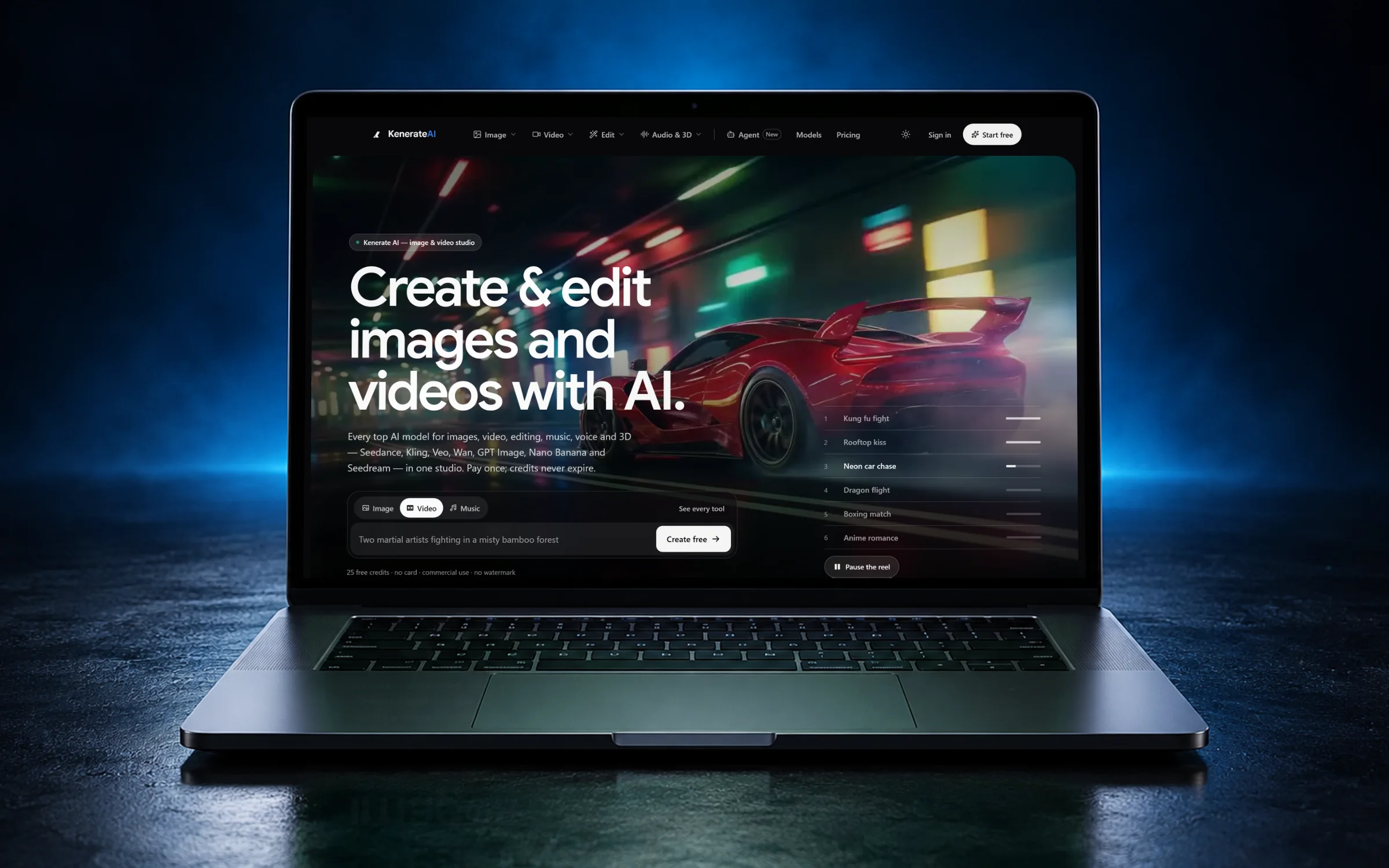
Kenerate AI is an all-in-one AI image and video studio that customers sign in to and pay for with credits. It is the kind of multi-model, credit-billed SaaS we build for clients.
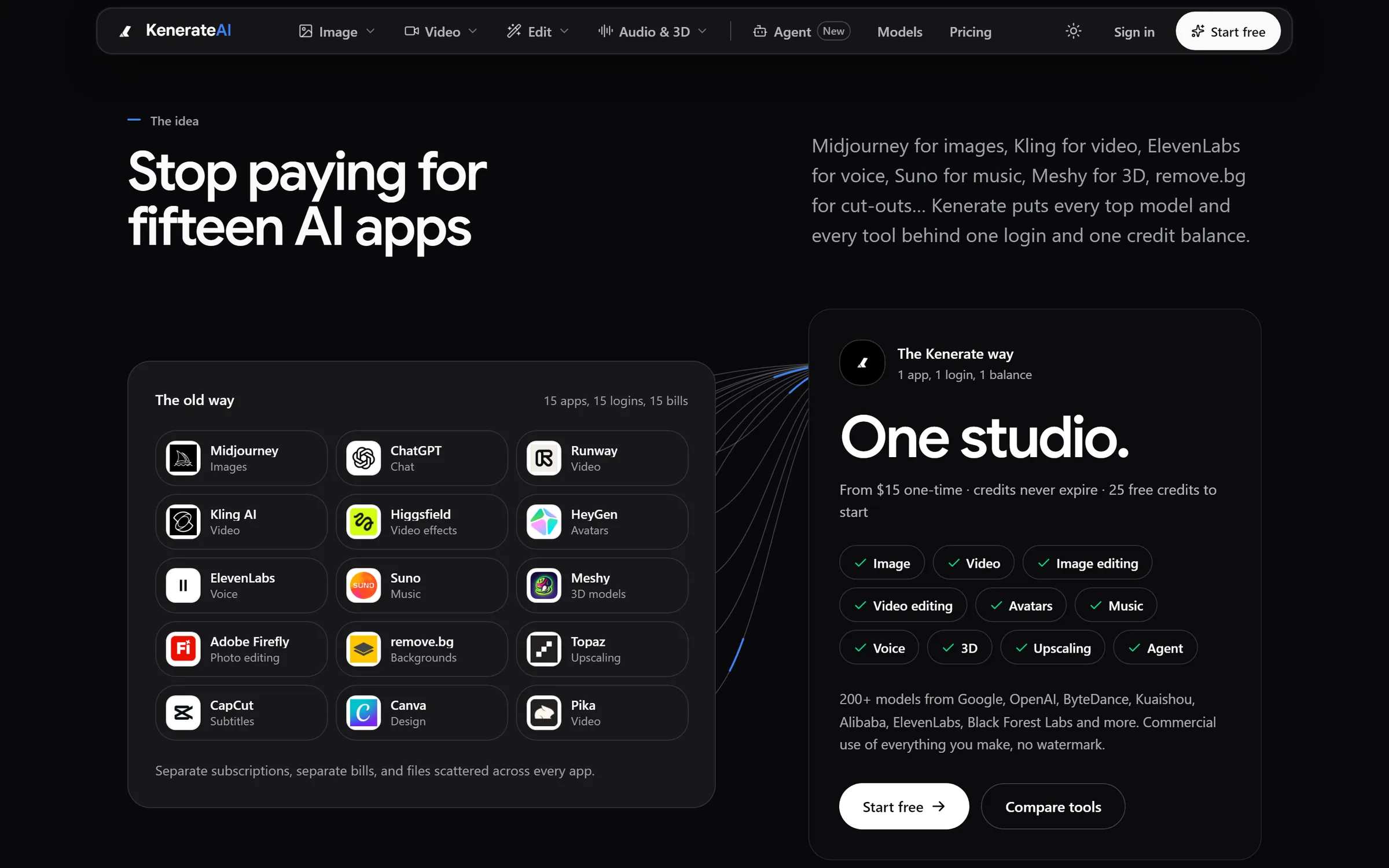
The idea: 15 apps, 15 logins, 15 bills become one studioDesigned and engineered by Elgrith
FIG 08 · Buyer’s checklist
Seven questions to ask any SaaS partner, us included, before you sign.
07principles
Ask for a live product you can sign up to and use, not just screenshots.
See Kenerate AIAsk how they isolate tenant data and handle roles, SSO and audit logs.
Ask about plans, trials, metering, credits, dunning and tax, not just a checkout button.
Your contract should assign the code, designs and IP to you. Ours does.
Ask about access control, secrets, backups, dependency updates and how they handle a security review.
Launch is the start. Ask who monitors, patches and ships features afterwards.
Support and maintenanceAsk when you can talk live. Our New Delhi day overlaps the UK morning, and we agree a regular call window for US teams.
FIG 09 · Process · 6 steps
Each phase has its own written scope and fixed quote, and you see working software at every sprint demo. You own the code and IP.
We map your users, plans, roles and integrations, and agree what v1 must do. You get a written scope and a fixed quote for the next phase.
A tested prototype of the key flows: sign-up, onboarding, the core job and upgrade. You can show it to users and investors.
The first paid release: accounts, tenants, billing and the core feature, deployed to cloud accounts registered to your business.
Real customers use the product. We watch analytics and feedback, fix what slows them down and harden security.
Roles, SSO, integrations, public API and the features your beta proved you need.
Monitoring, performance work, AI features and feature sprints as your customer base grows.
FIG 10 · What you get
Written into your fixed quote, so you know exactly what you are paying for before work starts.
12items
FIG 11 · Tech & tools
Proven, well-supported tools, chosen for your project and set up in accounts your business owns.
FIG 12 · Who it’s for
One team for product design, engineering, AI and cloud, with client partners in New York and London and engineering in New Delhi.
3 audiences
Founders
Discovery, prototype and MVP on production-grade code, so your first release doesn’t have to be thrown away.
Scale-ups
Replatform a legacy app, add enterprise features or ship AI your customers pay for, without stopping the roadmap.
Agencies
We design and build under your brand for your clients, with unbranded deliverables and your team leading the relationship.
FIG 13 · Working with us from the USA and UK
Every project gets a point of contact in New York or London and an engineering team in New Delhi. Here is how today’s working days line up, live.
New York
North America
--:--ET
London
UK & Europe
--:--UK
Fixed-scope project
A written scope, one fixed price and a dated plan. Suits websites, apps and MVPs.
Dedicated team
Designers and engineers on your roadmap every month, billed monthly.
White label
For US and UK agencies: our work, your brand, unbranded deliverables.
Calls on ET or UK hours
FIG 14 · Tech stack
Chosen per project, but this is where most of our SaaS builds start, and why.
| Layer | What we use | Why |
|---|---|---|
| Front end | React and Next.js | Fast, SEO-friendly marketing pages and app screens in one codebase |
| Back end | Node.js and Python | Node.js for APIs and real-time features, Python for data and AI work |
| Data | PostgreSQL and Redis | Reliable relational data with row-level security, plus fast caching and queues |
| Billing | Stripe | Subscriptions, usage metering, invoices, tax and dunning without building a billing system |
| Auth | Auth.js, Clerk or Amazon Cognito | Sign-in, SSO and SAML from a proven provider instead of hand-rolled auth |
| Hosting | Vercel, AWS and Cloudflare | Previews for every change, global delivery and room to scale |
| AI | OpenAI, Anthropic and open models | Model-agnostic, so you can switch on quality, cost or data policy |
FIG 15 · Project type
Four common starting points, and when each one fits.
| Best for | Not for | |
|---|---|---|
| Greenfield SaaS | A new product with a validated problem and a clear first customer | An idea nobody has tested yet: start with an MVP |
| Replatforming a legacy app | A product whose old code slows every release or blocks new features | Code that works and only needs new features: extend it |
| Adding AI to an existing SaaS | Features your customers ask for, such as search, summaries or agents | AI added for its own sake, with no plan for usage costs |
| White-label SaaS for agencies | Agencies that want to sell a SaaS build under their own brand | Agencies that need a team on-site with their client |
FIG 16 · Compare
| SaaS development company (Elgrith) | Freelancers | In-house team | |
|---|---|---|---|
| Best for | A full product: design, build, billing, cloud and support | Small, well-defined pieces of work | SaaS as your long-term core team |
| Coverage | Product, UX, engineering, AI, DevOps and SEO | One skill per person | Whoever you hire |
| Time to start | After a free call and a written scope | Fast, if you can find the right people | Months of recruiting |
| Continuity | One team from prototype to scale | Depends on each freelancer | Strong, once hired |
| Ownership | Code and IP assigned to you in writing | Depends on each contract | Yours |
FAQ
Straight answers about SaaS Development with Elgrith.
It designs, builds, hosts and maintains subscription software: product design, a multi-tenant back end, sign-in and roles, billing, integrations, security and scaling. Elgrith covers all of it with one team, from the first prototype to feature sprints after launch.
FIG 17 · Related
Free 30-minute call
Book a free SaaS scoping call. You get a written scope and a fixed quote for the first phase, and you own everything we build.
connect@elgrith.com+91 96039 20001Custom software development
Pick a day. You'll choose a time in your own time zone on the next step.