01
Digital wallets and payments
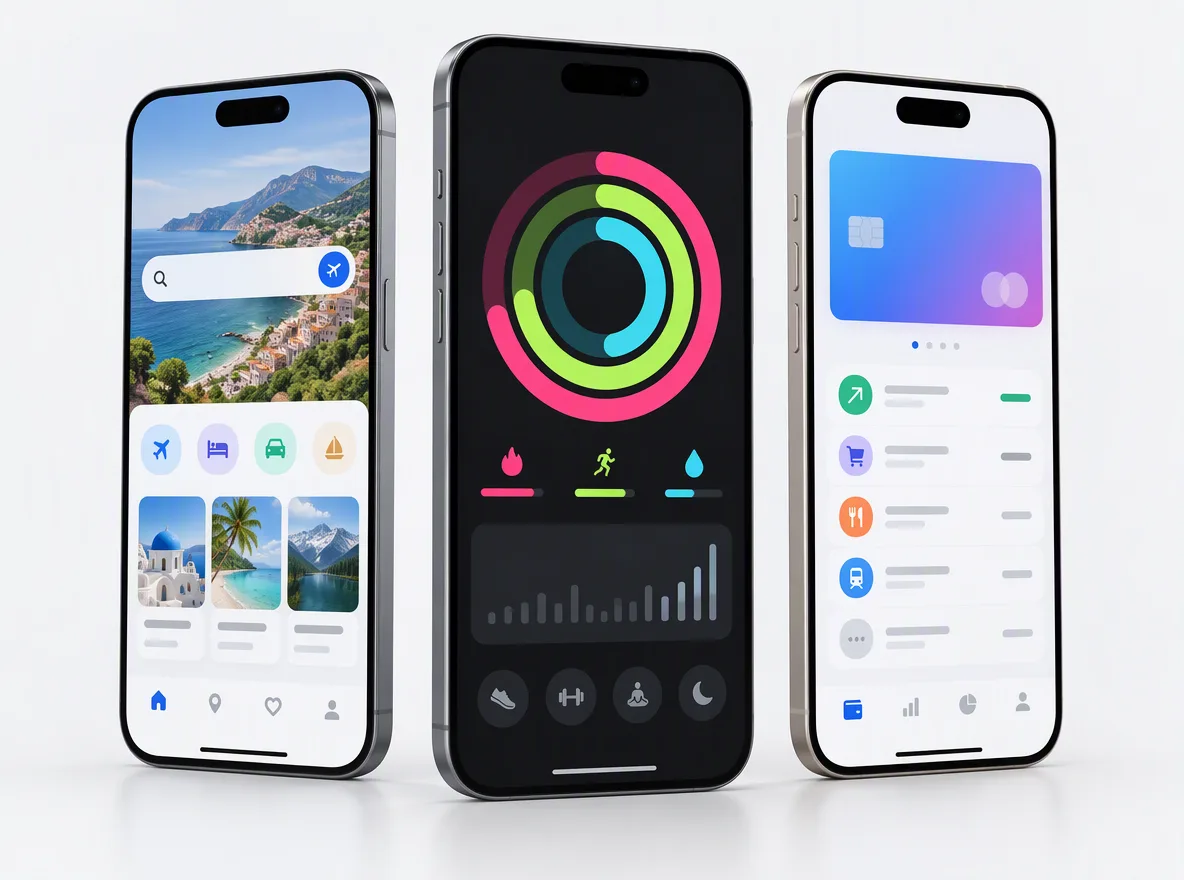
Stored balances, top-ups, transfers and card or bank payments, with every movement on a double-entry ledger.
FIG 01 · Fintech App Development
Wallets, payments, lending, open banking and investing apps, with the ledger, integrations and controls built to PCI DSS, KYC/AML and FCA expectations, and licenses and attestations left where they belong: with you or your regulated partner.
See how it works
FIG 02 · Quick answer
A fintech software development company designs and builds financial products such as wallets, lending, payments and open banking apps. Elgrith builds the app, ledger and integrations to PCI DSS, KYC/AML and FCA expectations, keeps card data out of scope with tokenized payments, and leaves licenses and attestations with you or your regulated partner.
FIG 03 · Why it matters
From the PCI Security Standards Council and the UK’s Financial Conduct Authority, read in October 2026.
01
51 of 64
The PCI SSC: “Of the 64 new requirements, 51 are future-dated and will be effective as of 31 March 2025.” They apply now, so we design payment pages and their scripts to keep your scope small.
Source: PCI Security Standards Council blog, 20 Aug 2024(opens in a new tab)02
16M+
The FCA: “Latest industry figures show there are more than 16 million users now benefiting from the service.”
Source: FCA, Open banking: 2025 progress(opens in a new tab)03
+53%
The FCA also reports that “the number of open banking payments has soared by 53% year on year”. Pay-by-bank is now a real option beside cards.
Source: FCA, Open banking: 2025 progress(opens in a new tab)FIG 04 · Responsibilities
No development company can make you compliant or licensed. We build the product and its controls; regulated permissions and formal attestations sit with you or your regulated partner. Here is the split.
| Elgrith (build) | You | Your regulated partner or assessor | |
|---|---|---|---|
| App, ledger and integrations | Design, build, test and document | Own the code, data and accounts | Not involved |
| Card data | Hosted fields and tokenization keep card numbers off your servers | Choose the payment provider and complete the right SAQ | The payment provider handles card data |
| PCI DSS | Build to reduce scope and support your evidence | Validate compliance each year | Your acquirer, or a QSA where required |
| Licenses and authorization | None: we are not a regulated firm | US money transmitter licenses or UK FCA authorisation, if you hold them yourself | Or a sponsor bank, EMI or payment institution you operate under |
| KYC/AML | Integrate your KYC vendor and build case-review screens | Set the risk policy and own the AML program | Your bank or EMI partner may set minimum checks |
| SOC 2 | Build controls that support a SOC 2 audit | Commission the audit | An independent CPA firm issues the report |
General guidance only, not legal or regulatory advice. We work with your compliance advisers and build to their requirements.
Comparing payment providers? Read Stripe vs PayPal vs SquareFIG 05 · What you get
Fintech MVPs and products for startups, lenders and finance teams, built on providers you choose and a ledger you own.
01
02
03
04
05
06
07
08
Deliverables
12
FIG 06 · Reliability
Money apps fail in specific ways: duplicate webhooks, timeouts mid-payment and balances that don’t add up. We design for each one before the first transaction.
FIG 07 · Security
We build to these standards and support your evidence. We don’t issue or imply certifications; attestations and reports come from your assessors and auditors.
06principles
Hosted fields and tokenization keep card numbers off your servers, which can shrink your assessment scope, and payment-page scripts are kept to a known, reviewed list.
Access reviews, change management, logging and backups built so a SOC 2 audit has evidence to test. The report itself comes from an independent auditor.
Identity verification, sanctions and PEP screening through vendors you choose, with case-review screens and every decision logged.
Data minimisation, retention rules and hosting regions chosen for where your customers and regulators are.
Encryption in transit and at rest, keys in a managed key service and secrets kept out of code.
SCA and 3-D Secure flows for UK and EU card payments, plus biometrics and device binding in the app.
FIG 08 · Open banking
Open banking lets your app, with the customer’s consent, read account data or start payments from their bank. The UK and the US got there differently.
06principles
Account information and payment initiation are regulated activities in the UK. Many apps reach banks through an FCA-authorised provider such as TrueLayer rather than seeking authorisation themselves.
VRPs let customers set up a mandate for payments that vary in amount, such as sweeping money between their own accounts.
Consent screens, expiry and re-authentication journeys designed so customers stay connected and in control.
In the US, apps commonly connect to bank accounts through data aggregators such as Plaid.
Pay-by-bank checkouts beside card payments, routed through your provider, with refunds and reconciliation handled.
Transactions categorized and stored with their source, so lending and budgeting features run on clean data.
Data engineeringFIG 09 · Choosing
What to ask when you compare the top fintech software development companies, us included.
06principles
A good partner tells you plainly what they build and what stays with you, your partner bank or your assessor.
Ask how they handle duplicate webhooks, timeouts mid-payment, refunds and disputes. Vague answers are a warning sign.
Be wary of “PCI certified app” or “guaranteed compliance”. PCI DSS validation belongs to the business that handles card data.
Ask how they would record a refund, a chargeback and a partial payout. The answer shows whether they have built money systems.
Code, cloud accounts, provider accounts and ledger data should be yours from day one.
Your compliance team and partner bank set requirements. The build team should take them as input, not argue with them.
FIG 10 · Process · 7 steps
Compliance scope agreed in discovery, a fixed written quote, weekly demos on sandbox accounts and launch with your compliance advisers in the loop.
Your product, markets, partners and the rules that apply, mapped into what we build and what your partners and advisers own. You get a written scope and a fixed quote.
Ledger, payment flows, data model and security designed first, with card data kept out of scope.
Onboarding, KYC and payment journeys designed for trust and tested with real users.
Weekly demos on sandbox accounts with your providers, never real customer money.
Payment, banking and KYC providers integrated, and failure cases tested: timeouts, duplicates, refunds and disputes.
A phased release with monitoring, reconciliation running from day one and a rollback plan ready.
Support, new features and provider changes, on terms agreed in your written scope.
FIG 11 · What you get
Written into your fixed quote, so you know exactly what you are paying for before work starts.
12items
FIG 12 · Tech & tools
Proven, well-supported tools, chosen for your project and set up in accounts your business owns.
FIG 13 · Who it’s for
In the US and the UK.
3 audiences
Startups
Fintech founders launching with a sponsor bank, EMI or banking-as-a-service partner, who need an architecture that won’t need rebuilding at scale.
Lenders
Lenders and BNPL providers that need application, decisioning, servicing and collections in one product.
UK fintech
UK fintechs work through our London client partner, with engineering in New Delhi. We build around open banking, SCA and UK GDPR, and work with your compliance team or your EMI or payment institution partner.
FIG 14 · Working with us from the USA and UK
Every project gets a point of contact in New York or London and an engineering team in New Delhi. Here is how today’s working days line up, live.
New York
North America
--:--ET
London
UK & Europe
--:--UK
Fixed-scope project
A written scope, one fixed price and a dated plan. Suits websites, apps and MVPs.
Dedicated team
Designers and engineers on your roadmap every month, billed monthly.
White label
For US and UK agencies: our work, your brand, unbranded deliverables.
Calls on ET or UK hours
FIG 15 · Cost
We don’t publish prices. These are the things that move the cost of any fintech app, ours or anyone else’s.
| Cost driver | Why it moves the price | How to keep it down |
|---|---|---|
| Product scope | Wallets, lending and investing each bring their own flows | Launch one core journey first |
| Partners and integrations | Each bank, payment, KYC or data provider adds build and testing | Start with a banking-as-a-service or EMI partner that bundles several |
| Ledger and reconciliation | Getting money movement provably right takes design and tests | Build the ledger once, early |
| Compliance evidence | PCI DSS and SOC 2 needs add controls and documentation | Reduce scope with tokenization and hosted fields |
| Platforms | iOS, Android and web each add work | Start cross-platform where it fits |
| Security testing | Specialist penetration tests and reviews take time | Plan them into the timeline from the start |
After discovery you get a written scope and a fixed quote from us. Licensing, partner, provider and assessor fees are paid to them.
Read our 2026 fintech app development cost guideFIG 16 · Definitions
Two standards that often get confused. Neither is something a developer can grant you.
| PCI DSS | SOC 2 | |
|---|---|---|
| What it covers | Protecting payment card data | Controls over security, and optionally availability, processing integrity, confidentiality and privacy |
| Who sets it | The PCI Security Standards Council | The AICPA |
| How it is validated | A self-assessment questionnaire or an assessment, depending on your volume and your acquirer | An independent CPA firm issues a SOC 2 report |
| Who needs it | Any business that stores, processes or transmits card data | Usually requested by business customers and partners |
| What we do | Build to reduce scope and support your evidence | Build controls that support your audit |
FIG 17 · Compare
| Fintech development company | In-house team | Off-the-shelf platform | |
|---|---|---|---|
| Speed to start | Fast: an existing team | Slow: hiring takes months | Fastest, within the platform’s features |
| Fit | Built around your product | Built around your product | Your product bends to the platform |
| Who owns the code | You, by contract | You | The platform vendor |
| Running cost | Project or retainer, then hosting you own | Salaries and benefits | Subscription and per-transaction fees |
| Best for | MVPs and new products with a clear owner | Long-term core teams | Standard products without differentiation |
FAQ
Straight answers about Fintech App Development with Elgrith.
It depends on the product scope, the number of banking, payment and KYC providers, the ledger and reconciliation work, the compliance evidence you need, the platforms and the security testing. We don’t publish prices: after a free discovery call you get a written scope and a fixed quote. Our 2026 fintech app cost guide explains published market ranges.
FIG 18 · Related
Free 30-minute call
Tell us what you’re building and who your partners are. After a free discovery call you get a written scope, a responsibility map and a fixed quote.
Pick a day. You'll choose a time in your own time zone on the next step.