01
Custom GenAI apps
New products built around language, image, audio or video models, from first prototype to production.
FIG 01 · Generative AI Development
LLM apps, RAG over your data, AI agents and AI features inside the products you already run, tested with evaluation sets and OWASP LLM safeguards, by the team that engineered Kenerate AI.
See how it works
FIG 02 · Quick answer
Generative AI development services design and build products that create text, images, code or answers with large language and media models. Elgrith scopes the use case, chooses models, builds RAG, agents and integrations, tests with evaluation sets and OWASP LLM safeguards, then ships and monitors, the same way we engineered our flagship, Kenerate AI.
FIG 03 · Why it matters
From OWASP, NIST and the European Commission, read on 23 Oct 2026.
01
LLM01
OWASP’s Top 10 for LLM Applications 2025: “A Prompt Injection Vulnerability occurs when user prompts alter the LLM’s behavior or output in unintended ways.” It can also arrive inside documents the app retrieves.
Source: OWASP GenAI, LLM01:2025 Prompt Injection(opens in a new tab)02
AI 600-1
NIST AI 600-1 (26 Jul 2024) is “a cross-sectoral profile of and companion resource for the AI Risk Management Framework”, written for generative AI.
Source: NIST AI 600-1, Generative AI Profile (26 Jul 2024)(opens in a new tab)03
2 Aug 2026
The European Commission says the Act “became applicable on 2 August 2026, with some exceptions”. Obligations for general-purpose AI models applied from 2 Aug 2025.
Source: European Commission, AI Act (updated 19 Oct 2026)(opens in a new tab)FIG 04 · Decide
Most generative AI apps start with good prompts and RAG. Fine-tuning comes later, if ever, when style or format must be consistent at scale.
| Prompt engineering | RAG (retrieval) | Fine-tuning | |
|---|---|---|---|
| What changes | The instructions and examples | The context: your documents are fetched per question | The model’s weights |
| Best for | Format, tone and simple tasks | Answers grounded in your own, changing data | A narrow style or format at high volume |
| Fresh data | Only what you paste in | Yes, as soon as it is indexed | No: retrain to update |
| Cost to change | Lowest | Moderate: index and retrieval tuning | Highest: data prep, training and re-evaluation |
| Main risk | Brittle prompts | Bad retrieval, injection via documents | Lock-in to one model version |
| Our page | Covered here | LLM integration | Covered here |
We choose per use case after testing on your data, and keep prompts, retrieval and evals portable so you can change models later.
Read RAG vs fine-tuning (2026)FIG 05 · What you get
Custom generative AI development services for startups and product teams: new GenAI apps, AI features inside existing software, and the data, evals and safeguards that keep them working after launch.

01
02
03
04
05
06
07
08
Deliverables
11
FIG 06 · How we work
The first question is whether this should be generative AI at all. When it should, we prove it on your data before we scale it.
FIG 07 · Flagship build
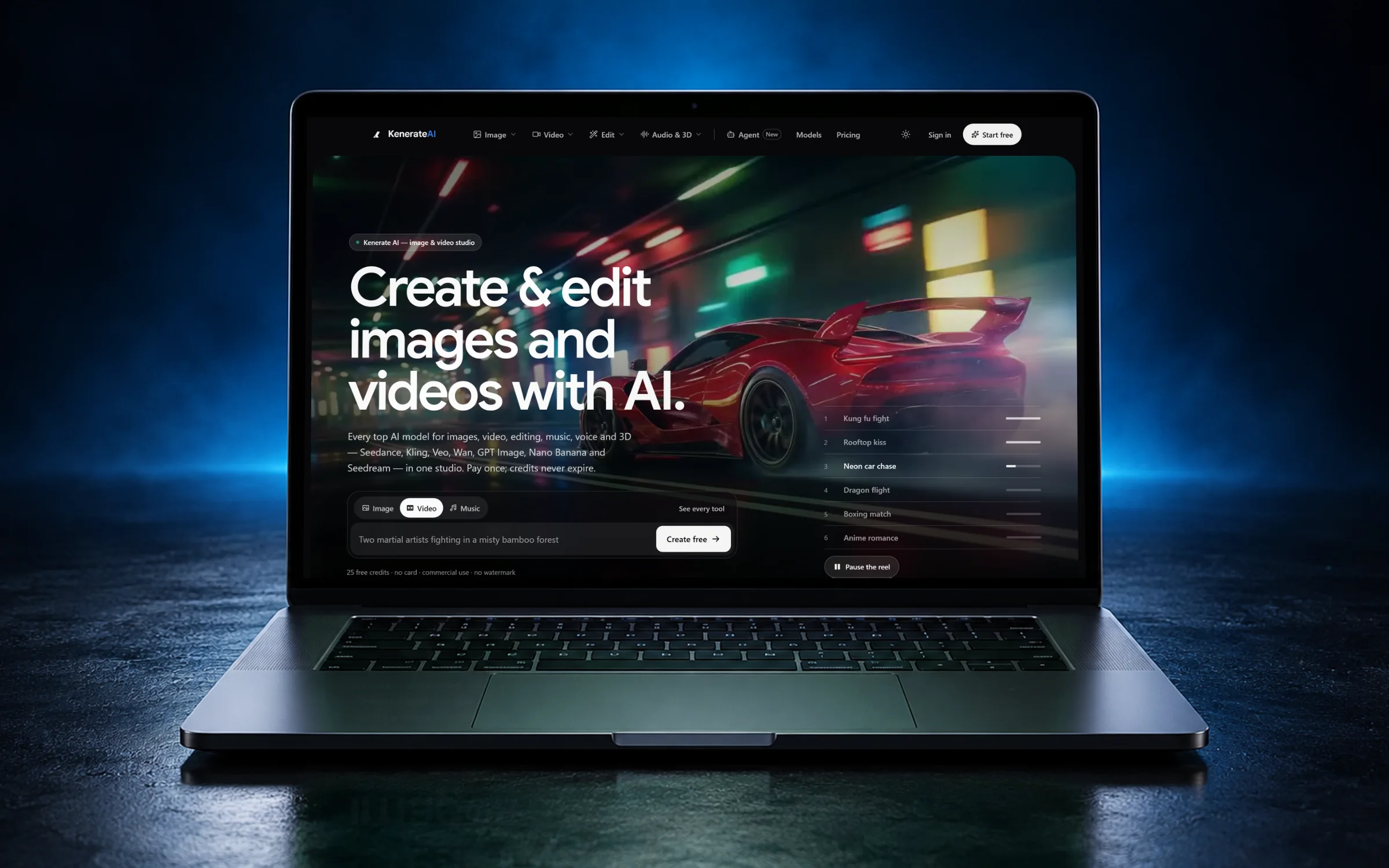
Kenerate AI is our flagship build: an all-in-one AI studio to create and edit images, video, music, voice and 3D. It puts 200+ top AI models in one app, with one login and one credit balance, and works inside other AI apps through MCP and CLI.
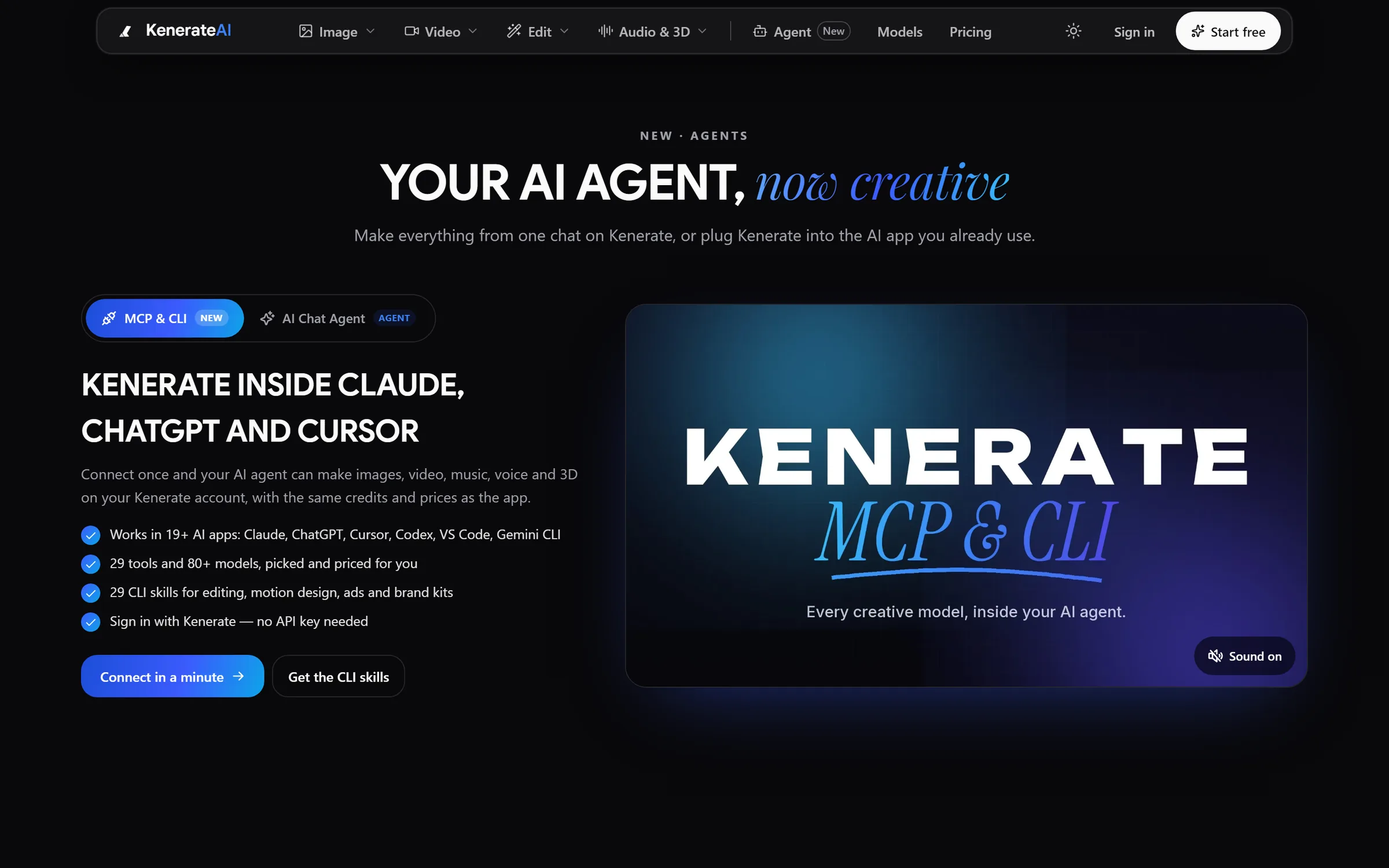
Agent: Kenerate inside Claude, ChatGPT and CursorDesigned and engineered by Elgrith
FIG 08 · Security
We threat-model every GenAI app against the OWASP Top 10 for LLM Applications 2025, starting with prompt injection.
06principles
Direct attacks from users and indirect ones hidden in retrieved documents, web pages or emails, tested before launch.
Agents get only the tools and data they need, with human approval on anything that spends money or sends messages.
Personal data minimised, masked where possible and kept in the regions your scope sets.
That depends on each provider’s terms and settings. We choose API settings and contracts where your data isn’t used to train models, and document them.
Prompts, retrieved sources, tool calls and outputs logged, so any answer can be traced.
FIG 09 · Regulation
We build to NIST AI 600-1 and design with the EU AI Act timeline in mind. We explain the dates; your lawyers decide what applies to you. This is not legal advice.
06principles
NIST’s Generative AI Profile (26 Jul 2024), a companion to the AI Risk Management Framework. We use it to structure risk reviews.
Governance rules and obligations for general-purpose AI models became applicable in the EU.
The AI Act became applicable on 2 August 2026, with some exceptions (European Commission, updated 19 Oct 2026).
After the AI Omnibus (in force 27 July 2026), the Annex III high-risk rules will apply from 2 December 2027.
Model and data inventory, eval results, risk notes and logs, ready for your compliance team.
Personal data mapped and minimised for UK and EU users, with processing documented.
FIG 10 · Scoping
Not sure where generative AI fits? A short scoping phase picks the use cases worth building and the ones to drop.
06principles
Ideas ranked by value, data readiness and risk, with the ones that shouldn’t be GenAI called out.
Model and infrastructure cost estimated per task, so the business case uses real numbers from your tests.
FIG 11 · Measurement
Every GenAI app ships with an eval suite. Targets are agreed with you and measured on your data, not on public benchmarks.
| Metric | What it tells you | How we measure it |
|---|---|---|
| Answer accuracy | Whether answers are right | A golden dataset of real questions with agreed answers |
| Groundedness | Whether answers stick to your sources | Checks that each claim is supported by a retrieved passage |
| Retrieval quality | Whether RAG finds the right documents | Hit rate on the golden set’s source documents |
| Safety | Whether attacks and off-limits requests are refused | Prompt-injection and abuse test sets, run on every release |
| Human review | Whether people agree with the output | Sampled reviews by your experts, with a review gate |
| Cost and latency | Whether it is affordable and fast enough | Cost per task and response time, tracked in production |
Regression evals run before every prompt, model or data change. We don’t quote benchmark scores we can’t reproduce on your data.
FIG 12 · Process · 6 steps
A fixed written quote after a free call, a prototype on your real data, evals before launch and monitoring after. You own the code, prompts and IP.
Tell us what you want to build or fix. We ask about users, data, integrations and deadlines before we talk about tools.
The use case, your data, the risks and how success will be measured, including whether generative AI is the right tool at all.
A written scope, a fixed quote and the plan for hand-over, before any work starts.
Two-week sprints in your repository, with a working demo on your data every week and eval scores tracked from the first sprint.
A staged rollout behind feature flags, with guardrails, logging and monitoring on from day one.
Eval runs before every model or prompt change, monitoring of quality and cost, and fixes in a window agreed in your written scope.
FIG 13 · What you get
Written into your fixed quote, so you know exactly what you are paying for before work starts.
11items
FIG 14 · Tech & tools
Proven, well-supported tools, chosen for your project and set up in accounts your business owns.
FIG 15 · Who it’s for
New products and new features, with the same rules: evals, safeguards, your code and your data.
3 audiences
Startups
We prove the idea on real data, then build the product around it, the way we engineered Kenerate AI.
Product teams
Summaries, smart search, drafting and assistants added to your software, behind your auth and permissions.
UK and EU
UK projects run through our London client partner, with engineering at our New Delhi HQ. We write in UK English, design data handling around UK GDPR and hand over documentation your compliance team can use for the EU AI Act.
FIG 16 · Working with us from the USA and UK
Every project gets a point of contact in New York or London and an engineering team in New Delhi. Here is how today’s working days line up, live.
New York
North America
--:--ET
London
UK & Europe
--:--UK
Fixed-scope project
A written scope, one fixed price and a dated plan. Suits websites, apps and MVPs.
Dedicated team
Designers and engineers on your roadmap every month, billed monthly.
White label
For US and UK agencies: our work, your brand, unbranded deliverables.
Calls on ET or UK hours
FIG 17 · EU AI Act
The dates UK and EU buyers ask about, as the European Commission states them. Not legal advice.
| Date | What applies | What it means for a GenAI build |
|---|---|---|
| 2 Aug 2025 | Governance rules and obligations for general-purpose AI (GPAI) models | Mostly for model providers; we document which models you use |
| 27 Jul 2026 | AI Omnibus enters into force | Moves the Annex III high-risk date |
| 2 Aug 2026 | General application, with some exceptions | Most remaining rules now apply; check which exceptions cover your system |
| 2 Dec 2027 | Annex III high-risk rules | Check early if your use case is on the Annex III list |
From the European Commission’s AI Act page (updated 19 Oct 2026), read 23 Oct 2026.
FIG 18 · Compare
| Generative AI development | LLM integration | AI agent development | |
|---|---|---|---|
| Best for | A new GenAI product or a major AI feature | Adding an LLM or RAG to an existing system | Automating multi-step tasks across tools |
| Output | An app, with evals and monitoring | An integration, API or RAG service | An agent with tools and approvals |
| Starts with | Discovery: should this be GenAI? | Your current system and data | The task and the tools it needs |
| Our page | You are here | LLM integration | AI agent development |
FAQ
Straight answers about Generative AI Development with Elgrith.
Discovery (should this be generative AI?), model choice, a prototype on your data, the production build (custom GenAI apps, RAG, agents, chat and voice, or AI features inside existing products), evaluation sets, security hardening against the OWASP LLM Top 10, launch and monitoring. You own the code, prompts and data.
FIG 19 · Related
Free 30-minute call
Tell us the use case, or the prototype that isn’t ready for real users. After a free call you get a written scope, a plan for evals and safeguards, and a fixed quote.
Pick a day. You'll choose a time in your own time zone on the next step.