01
ChatGPT and OpenAI API integration
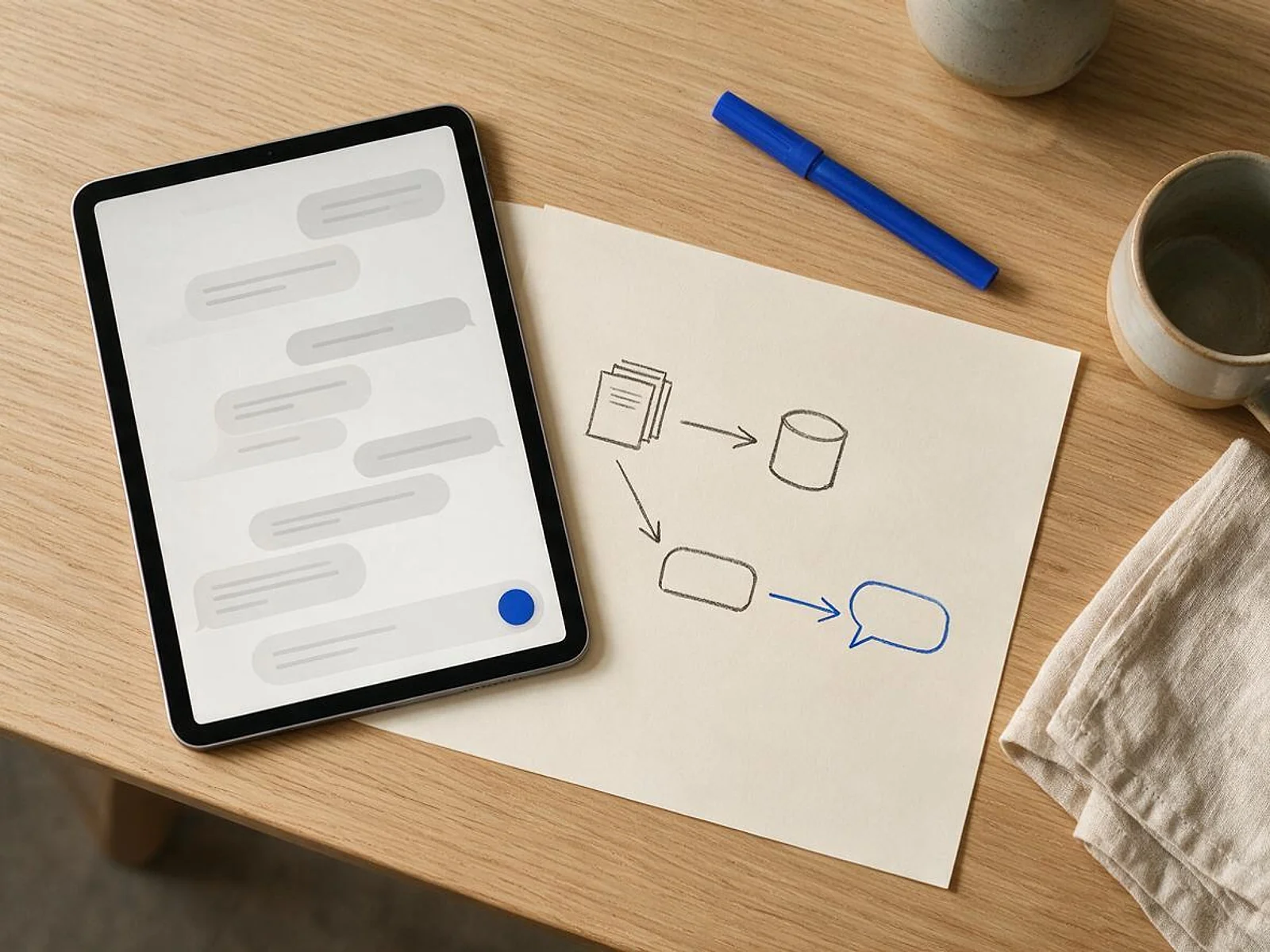
GPT models wired into your product through the OpenAI API, with function calling, structured outputs and streaming responses.
FIG 01 · LLM Integration
ChatGPT, Claude, Gemini or open-weight models built into your product and internal tools, grounded in your data, tested with evals and watched in production.
See how it works
FIG 02 · Quick answer
Elgrith is an LLM development company that builds large language model features into products and internal tools. We integrate ChatGPT, Claude, Gemini or open-weight models, ground answers in your data with retrieval-augmented generation (RAG), add evals and guardrails, and monitor cost and latency in production. We designed and engineered Kenerate AI.
FIG 03 · Why it matters
From OpenAI’s developer docs and Stanford HAI’s AI Index 2025. The cost and data questions that used to stall LLM projects now have answers.
01
280×
Stanford HAI found the inference cost for a system performing at GPT-3.5 level dropped over 280-fold between November 2022 and October 2024.
Source: Stanford HAI, AI Index 2025(opens in a new tab)02
Not used
OpenAI says that, as of March 1, 2023, data sent to the OpenAI API is not used to train or improve its models.
Source: OpenAI developer docs, Your data(opens in a new tab)03
30 days
OpenAI says abuse-monitoring logs are generated by default for all API feature usage and kept for up to 30 days. We design your data flows with that in mind.
Source: OpenAI developer docs, Your data(opens in a new tab)FIG 04 · Quick answer
Most business use cases need good prompts and RAG, not a custom model. Here is when each approach fits.
| Approach | Best for | What it needs | Watch out for |
|---|---|---|---|
| Prompt-only | Drafting, rewriting, classifying and summarising general text | Clear prompts, structured outputs and a test set | It knows nothing about your private data |
| RAG (retrieval-augmented generation) | Answers from your documents, products or records, with citations | Clean source data, embeddings, a vector index and access rules | Answers are only as good as retrieval, so it needs evals |
| Fine-tuning | A consistent format, tone or narrow task at high volume | A set of high-quality example inputs and outputs | It doesn’t add fresh knowledge; retrain when things change |
| Custom model | Rare cases with unique data at large scale or strict hosting rules | Large datasets, ML infrastructure and a long runway | Highest cost and slowest to change |
We often combine them: RAG for knowledge, structured outputs for format, and fine-tuning only when evals show it helps.
FIG 05 · What you get
Model-agnostic engineering, from the first prompt to production monitoring. We pick the model per task and prove it with evals.
01
02
03
04
05
06
Deliverables
12
FIG 06 · Use cases
The work that pays back fastest: reading, sorting, finding and drafting, with a person in charge of the decisions.
FIG 07 · Flagship build
Kenerate AI is our flagship build, an all-in-one AI image and video studio we designed and engineered. It runs many AI models behind one product, the same kind of model-agnostic engineering your LLM features need.
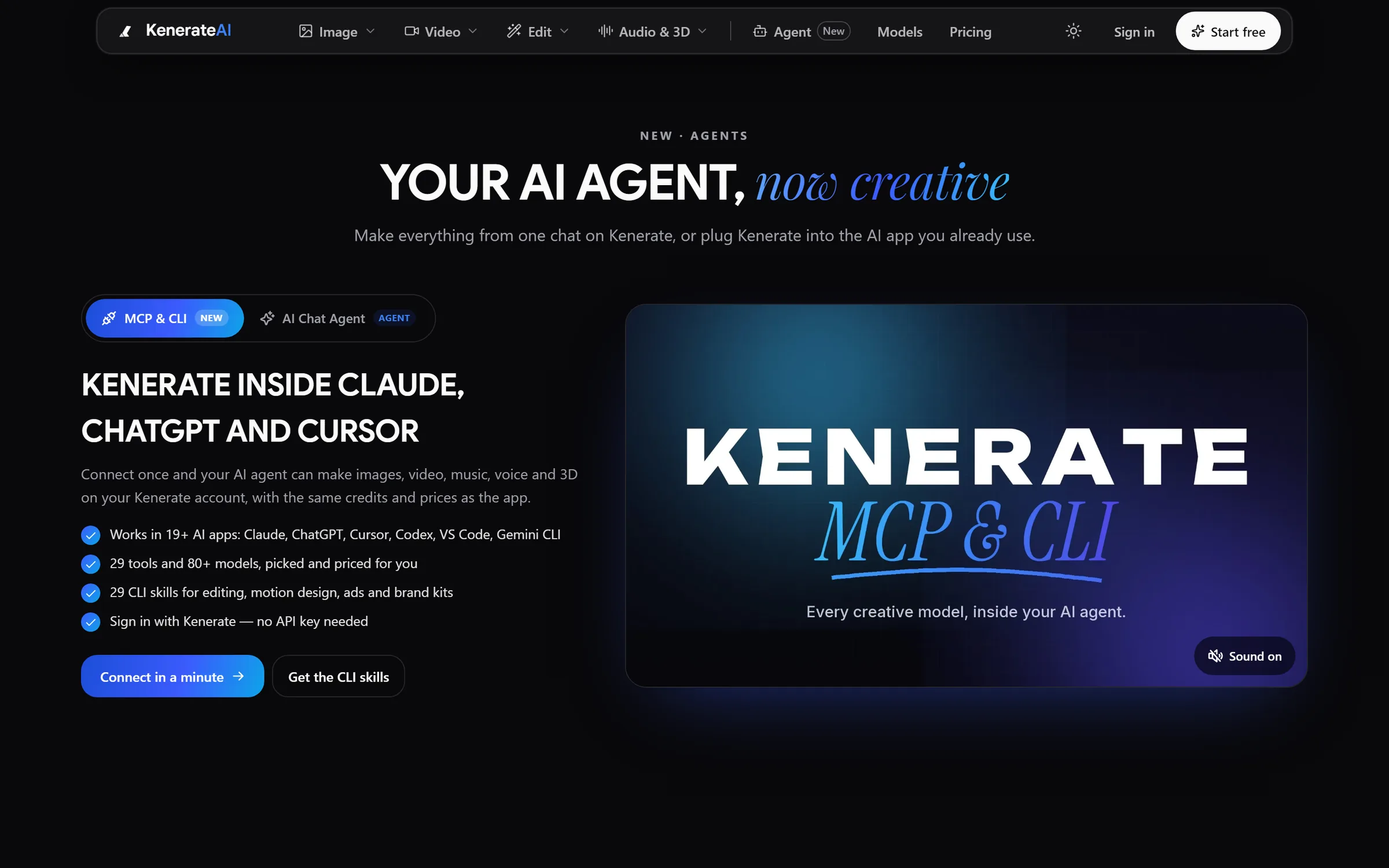
Agent: Kenerate inside Claude, ChatGPT and CursorDesigned and engineered by Elgrith
FIG 08 · Data and providers
Every provider has its own data terms. We read them for your use case and design the data flow before any production data is sent.
05principles
OpenAI says data sent to its API has not been used to train or improve its models since March 1, 2023. We check the equivalent terms for every provider we propose.
OpenAI keeps abuse-monitoring logs for up to 30 days by default. Where a provider offers zero-retention options and your use qualifies, we help you apply for them.
Personal data masked or removed before it reaches a model, when the task doesn’t need it.
RAG only retrieves what the signed-in user is allowed to see, so the model can’t leak another team’s records.
We document data flows, providers and model use to support your DPIA and risk assessment. Your legal adviser confirms your obligations.
FIG 09 · Related builds
LLM integration is the engine. If you need a specific vehicle, these pages go deeper.
06principles
On your website, WhatsApp, Slack or phone, with handover to people.
AI chatbot developmentAgents that use your tools through APIs and MCP, with approval steps.
AI agent developmentStrategy, use-case selection and delivery planning for UK businesses.
AI consultancy, LondonCost drivers for AI products in the US, from third-party sources.
AI app development costFIG 10 · Measurement
We agree what “good” means before building, then measure it on every release.
| Metric | What it tells you | How we measure it |
|---|---|---|
| Answer accuracy | Whether outputs are correct for real cases | An eval set of your own questions and expected answers |
| Groundedness | Whether answers stick to your sources | Citation checks and LLM-as-judge reviews, spot-checked by people |
| Refusals | Whether it declines what it shouldn’t answer | Out-of-scope and prompt-injection test cases |
| Latency | How long users wait | Traces per request in production |
| Cost per task | What each answer or extraction costs | Token and provider usage per feature |
| User feedback | Whether people find it useful | Thumbs, edits and escalation rates |
Targets are set with you during the prototype. We don’t quote accuracy figures before testing on your data.
FIG 11 · Process · 6 steps
A fixed written quote and a phased plan. You see the prototype’s eval results before we build for production.
The task, the users, the data involved and the success metric, written down. You get a written scope and a fixed quote.
We check the documents and records the feature will use: quality, permissions, personal data and how often they change.
A working prototype tested against an eval set built from your real cases, comparing models and approaches.
The feature built into your product or tools, with guardrails, access rules, fallbacks and tracing.
A staged rollout with dashboards for quality, cost and latency, and alerts when something drifts.
Evals rerun on every prompt or model change, and new cases added from real usage.
FIG 12 · What you get
Written into your fixed quote, so you know exactly what you are paying for before work starts.
12items
FIG 13 · Tech & tools
Proven, well-supported tools, chosen for your project and set up in accounts your business owns.
FIG 14 · Who it’s for
Same engineering, different starting points.
3 audiences
SaaS
LLM features that fit your product, your pricing and your users’ data, with costs you can predict.
Operations
Extraction, search and drafting inside the tools your team already uses, with people approving.
Regulated
Careful provider choice, data minimisation and documentation for teams that answer to regulators.
FIG 15 · Working with us from the USA and UK
Every project gets a point of contact in New York or London and an engineering team in New Delhi. Here is how today’s working days line up, live.
New York
North America
--:--ET
London
UK & Europe
--:--UK
Fixed-scope project
A written scope, one fixed price and a dated plan. Suits websites, apps and MVPs.
Dedicated team
Designers and engineers on your roadmap every month, billed monthly.
White label
For US and UK agencies: our work, your brand, unbranded deliverables.
Calls on ET or UK hours
FIG 16 · Model-agnostic
We don’t sell one provider. These are the usual starting points, and evals on your data make the final call.
| Model family | Often a good fit when | Consider |
|---|---|---|
| OpenAI GPT models | You want a broad ecosystem, structured outputs or a ChatGPT app | Data terms and retention for your use case |
| Anthropic Claude | Tasks involve long documents, careful writing or MCP-based tools | Provider terms and regional availability |
| Google Gemini | You already run on Google Cloud or Workspace, or need mixed media input | Which Gemini offering and terms apply |
| Open-weight (Llama, Mistral) | You need self-hosting, data residency or cost control at volume | Hosting, scaling and quality trade-offs |
FIG 17 · Compare
| LLM integration (this page) | AI chatbot | AI agent | |
|---|---|---|---|
| What it is | LLM features inside your product or internal tools | A conversational assistant for customers or staff | Software that plans steps and uses tools to finish a task |
| Typical output | Extracted fields, search results, drafts, summaries | Answers in a chat window, with handover | Updated records, sent drafts, completed workflows |
| Where it lives | Your app’s screens, APIs and back office | Website, WhatsApp, Slack or phone | Behind the scenes, with approvals |
| Start here if | You want AI inside what you already have | Your customers ask the same questions daily | A multi-step task eats hours every week |
FAQ
Straight answers about LLM Integration with Elgrith.
An LLM development company builds features on large language models: it picks the right model, connects it to your data with RAG or APIs, writes and tests prompts, adds guardrails and evals, and runs the feature in production with cost and latency monitoring. Elgrith does this for products and internal tools, and designed and engineered Kenerate AI.
FIG 18 · Related
Free 30-minute call
Tell us the task and the data behind it. After a free call you get a written scope, an eval plan and a fixed quote.
Pick a day. You'll choose a time in your own time zone on the next step.