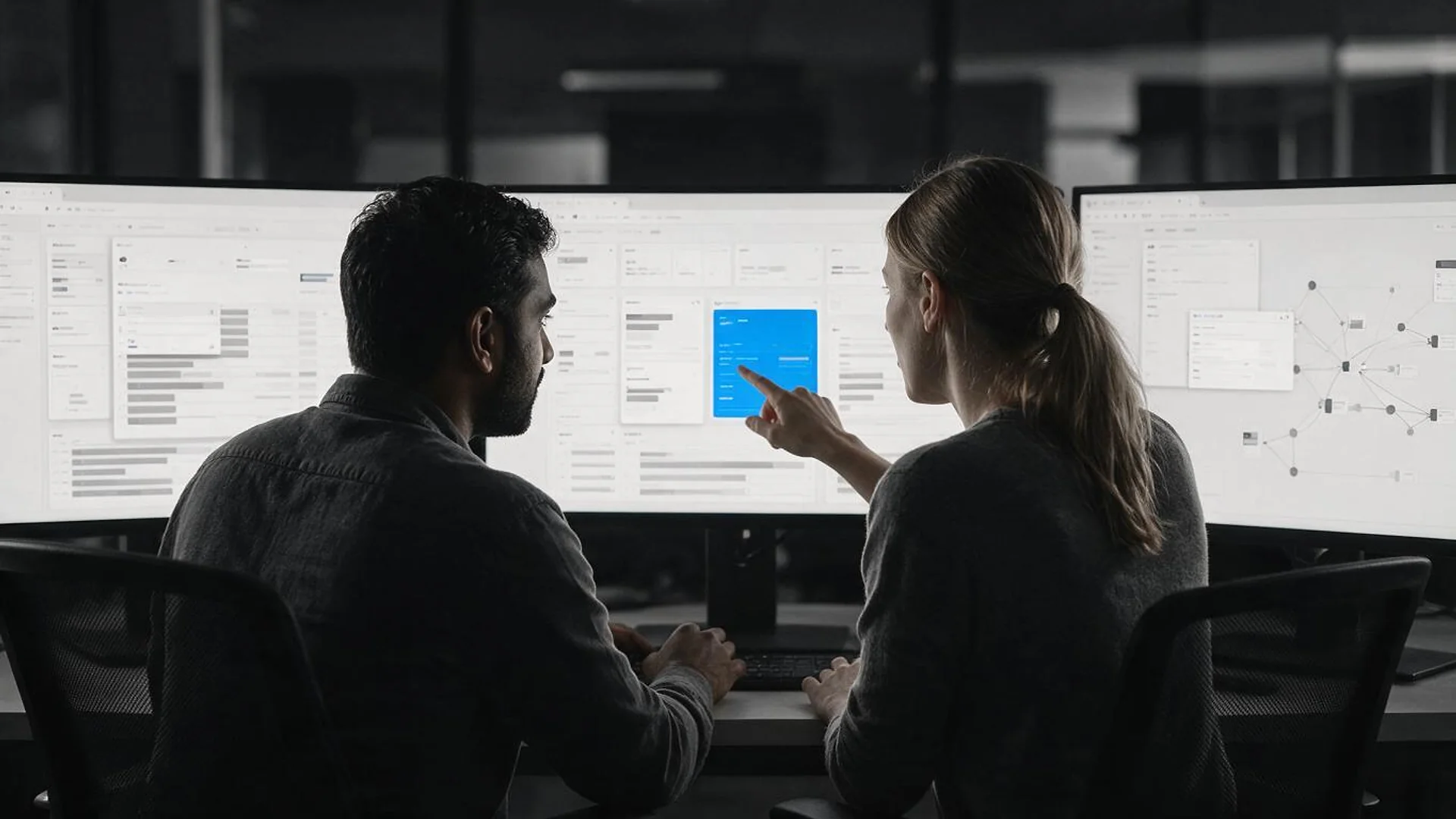
01
Custom web apps
Booking systems, dashboards, marketplaces and internal tools, with the front end, API and database built together so they fit.
FIG 01 · Full-Stack Development
Interface, APIs, database, auth, CI/CD, cloud and AI features, built and run by one accountable team on proven stacks, with accessibility and security written into the scope and the code in your repository from day one.
See how it works
FIG 02 · Quick answer
Full-stack development services cover every layer of a web or mobile product: interface, APIs, database, authentication, cloud hosting and deployment. Elgrith gives you one accountable team for all of it, on stacks such as React or Next.js with Node.js, Python, .NET or Java, plus AI features, accessibility and security built in.
FIG 03 · Why it matters
From the 2025 Stack Overflow Developer Survey and the US Bureau of Labor Statistics (pages last modified 27 Aug 2026), read on 23 Oct 2026.
01
27%
“Developer, full-stack” was the largest role in the 2025 Stack Overflow survey, at 27% of all respondents, ahead of back-end developers at 14.2%.
Source: Stack Overflow Developer Survey 2025, developer roles(opens in a new tab)02
10%
The BLS projects employment of software developers, QA analysts and testers to “grow 10 percent from 2025 to 2035”, which it rates as much faster than average.
Source: US BLS, Software developers (last modified 27 Aug 2026)(opens in a new tab)03
$99,520
The BLS lists a median of $99,520 a year for web developers and digital designers in 2025, before benefits, hiring time and the tools each hire needs. That is the market you hire into, not what we charge.
Source: US BLS, Web developers and digital designers (last modified 27 Aug 2026)(opens in a new tab)FIG 04 · Definition
“Full stack” used to mean a front end and a back end. In 2026 one team should own eight layers, from the screen your users tap to the alert that fires when something breaks.
| Layer | What we own | Typical tools | What you get |
|---|---|---|---|
| 1. UI | Web and mobile screens, design system, accessibility | React, Next.js, Angular, Vue, TypeScript | Fast, WCAG 2.2 AA screens |
| 2. API | REST or GraphQL endpoints, validation, versioning | Node.js, Python (Django, FastAPI), .NET, Java (Spring Boot), Laravel | Documented, typed APIs |
| 3. Data | Schema, migrations, queries, caching, backups | PostgreSQL, MySQL, MongoDB, Redis | A data model that scales with you |
| 4. Auth | Sign-in, roles, permissions, secrets | OAuth 2.0 / OIDC, SSO, managed identity providers | Least-privilege access by default |
| 5. CI/CD | Tests, builds and deploys on every change | GitHub Actions, GitLab CI, Docker | Small, safe releases with a rollback |
| 6. Cloud | Hosting, networking, scaling, cost | AWS, Azure, Google Cloud, Vercel, Kubernetes when it pays | Infrastructure as code in your account |
| 7. Observability | Logs, metrics, traces, uptime, alerts | OpenTelemetry, Sentry, cloud monitoring | Problems found before users report them |
| 8. AI features | LLM features, RAG search, agents, evals | LLM APIs, vector search, MCP | AI that is measured, not bolted on |
Not every product needs all eight on day one. We agree which layers are in scope, and which tools, in your written quote.
Need the infrastructure side on its own? DevOps consultingFIG 05 · What you get
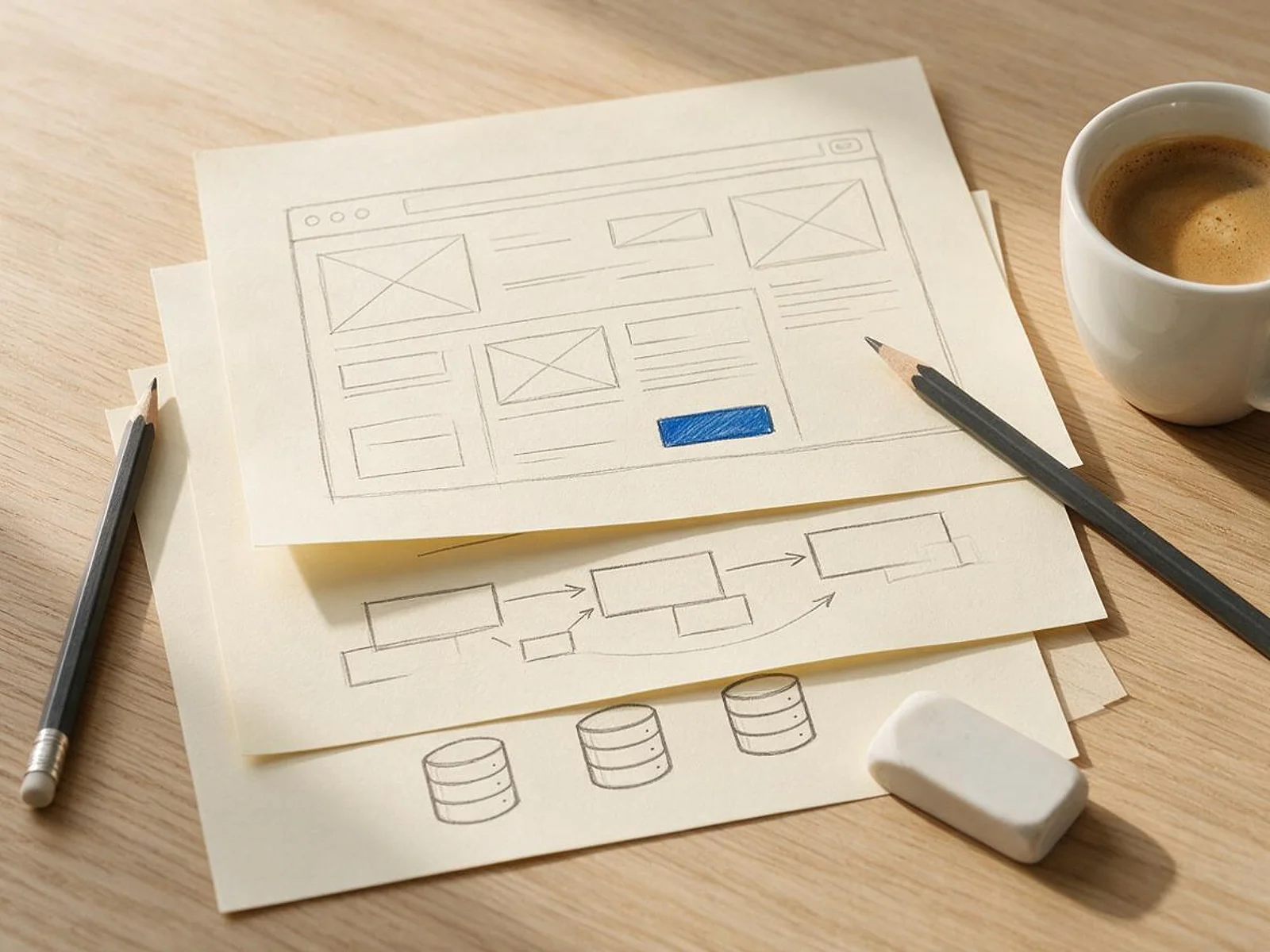
Full-stack web apps, portals and SaaS products, designed, built and run by one team, from the first database migration to the support after launch.
01
02
03
04
05
06
07
08
Deliverables
12
FIG 06 · Stacks
We pick the stack for your product, team and hiring market, not our habits, and write the reason into your scope. Each stack has its own page with versions, trade-offs and upgrade paths.
FIG 07 · Flagship build
Kenerate AI is an all-in-one AI studio we designed and engineered end to end: the product UI, the accounts and credits behind it, the integrations with many AI providers and the MCP and CLI access that lets other AI apps use it.
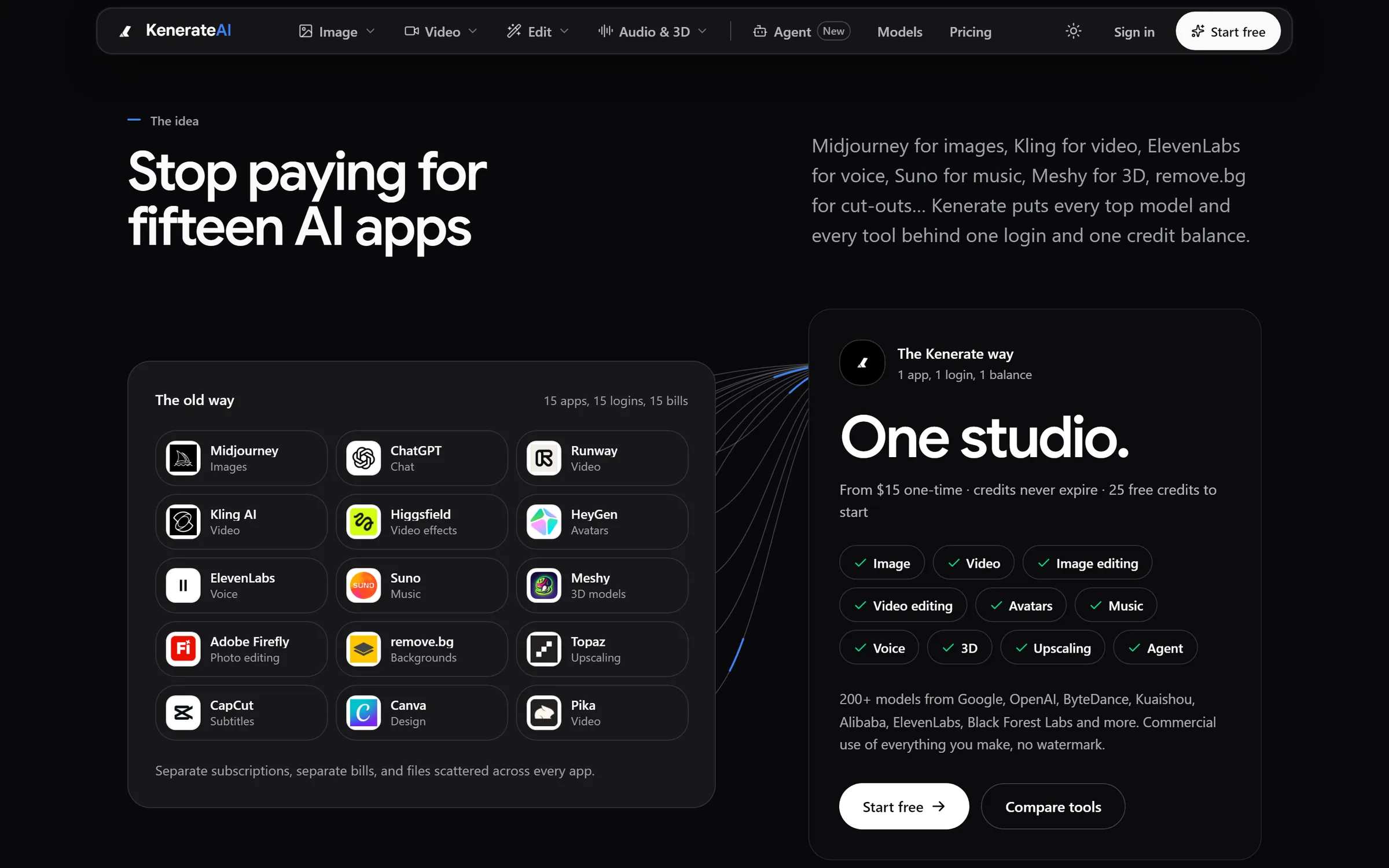
The idea: 15 apps, 15 logins, 15 bills become one studioDesigned and engineered by Elgrith
FIG 08 · Hire
Full-stack developers who join your stand-ups, work in your repository and follow your code review rules, managed from our New Delhi HQ.
06principles
One full-time developer on your product, working in your tools and your sprint, across front end and back end.
Developers, a tester, a designer or a DevOps engineer added to your team for a release or a backlog.
A defined app or feature for a fixed quote, delivered in sprints with weekly demos.
Interviews, onboarding, replacements and hand-over, explained.
Hire dedicated developersFIG 09 · Built in
The parts that agencies leave for “phase two” are in phase one. They are cheaper to build in than to bolt on, and they are written into your scope.
06principles
Screens designed and tested against WCAG 2.2 level AA, the current W3C Recommendation: keyboard, contrast, labels and focus.
Security requirements drawn from OWASP ASVS 5.0 (published 30 May 2025): auth, access control, input handling and secrets.
Tests, linting and builds on every pull request, with deploys to staging and production from the pipeline.
Error tracking, logs, uptime checks and alerts to your team and ours, set up before launch.
Known-vulnerability checks on every build, with flagged packages fixed or replaced.
FIG 10 · AI
AI is now a layer of the stack, not a separate project. We add it where it saves your users time, measure it and keep your data under your rules.
06principles
Retrieval-augmented (RAG) search that answers from your documents and records, cites its sources and respects who can see what.
In-product assistants that draft, summarise and explain, using the same permissions as the user.
Agents that call your APIs to finish multi-step tasks, with approval steps for anything irreversible.
Test sets built from real tasks, tracing on every call and spend limits, so quality and cost are measured.
FIG 11 · Process · 6 steps
A fixed written quote after a free call, sprints with weekly demos across front end and back end, and one team that answers for the whole product. You own the code and IP.
Tell us what you are building or what is breaking. We ask about users, data, integrations and deadlines, not just the framework.
For a new product: users, data model, integrations and which of the eight layers are in scope. For an existing app: versions, test coverage, hosting and the risky parts of the code.
A written scope, a fixed quote and the plan for versions, hosting and hand-over, before any work starts.
Sprints in your repository, with pull requests you can read, tests in CI and a demo of working front end and back end on staging every week.
A planned release from the pipeline, with monitoring live, a rollback ready and runbooks handed over.
Security releases applied in a patch window agreed in your written scope, plus planned upgrades before your versions lose support.
FIG 12 · What you get
Written into your fixed quote, so you know exactly what you are paying for before work starts.
12items
FIG 13 · Tech & tools
Proven, well-supported tools, chosen for your project and set up in accounts your business owns.
FIG 14 · Who it’s for
New products, growing products and rescues, with the same rules: one accountable team, your repository, your IP.
3 audiences
Startups
An MVP built by one team on a stack you will not have to rewrite, with the data model, auth and CI right from the start.
Product teams
Full-stack developers who join your sprints and ship across front end and back end, so features land without hand-offs between teams.
UK teams
UK projects run through our London client partner, with engineering at our New Delhi HQ. We write in UK English, design data handling around UK GDPR and agree working hours in your written scope.
FIG 15 · Working with us from the USA and UK
Every project gets a point of contact in New York or London and an engineering team in New Delhi. Here is how today’s working days line up, live.
New York
North America
--:--ET
London
UK & Europe
--:--UK
Fixed-scope project
A written scope, one fixed price and a dated plan. Suits websites, apps and MVPs.
Dedicated team
Designers and engineers on your roadmap every month, billed monthly.
White label
For US and UK agencies: our work, your brand, unbranded deliverables.
Calls on ET or UK hours
FIG 16 · Team shape
Both models work. The question is who owns a bug that crosses the line between front end and back end.
| One full-stack team | Separate front-end and back-end teams | |
|---|---|---|
| Who owns a feature | One team, end to end | Split across two teams and a hand-off |
| API changes | Made and used in the same pull request | Negotiated between teams |
| Best for | Most web apps, SaaS and MVPs | Very large products with deep specialist work |
| Watch for | Depth in rare specialisms: we add specialists when needed | Slower delivery and gaps between layers |
FIG 17 · Hire
We don’t publish rates. This is how the three ways to work with full-stack developers compare.
| Dedicated developer | Team extension | Fixed-scope project | |
|---|---|---|---|
| Best for | A steady backlog on one product | A release or a backlog spike | A defined app, feature or migration |
| Who manages the work | You, in your sprint | You, with our lead | Us, against a written scope |
| How it is priced | Monthly, per developer | Monthly, per team | One fixed quote |
| Code and IP | Yours | Yours | Yours |
FIG 18 · Compare
| React / Next.js + Node.js | React + Python | Angular + .NET or Java | Vue / Nuxt + Laravel | |
|---|---|---|---|---|
| Best for | SaaS, marketplaces, real-time apps | Data-heavy products and AI features | Enterprise systems with existing Microsoft or Java estates | Admin-heavy web apps and fast-moving teams |
| Language | TypeScript end to end | TypeScript + Python | TypeScript + C# or Java | JavaScript or TypeScript + PHP |
| Strength | One language across the stack | Python’s data and AI libraries | Strong structure for large teams | Batteries-included back end, gentle front end |
| Our pages | React · Node.js | React · Python | Angular · .NET · Java | Vue.js · Laravel |
FAQ
Straight answers about Full-Stack Development with Elgrith.
It designs, builds and runs every layer of a web or mobile product: the interface, APIs, database, authentication, CI/CD, cloud hosting and monitoring. Elgrith does all of that with one accountable team, adds AI features where they help, and builds to WCAG 2.2 AA and OWASP ASVS-aligned security from the first sprint.
FIG 19 · Related
Free 30-minute call
Tell us what you are building, or what is stuck. After a free call you get a written scope, the stack we recommend and why, and a fixed quote.
Pick a day. You'll choose a time in your own time zone on the next step.